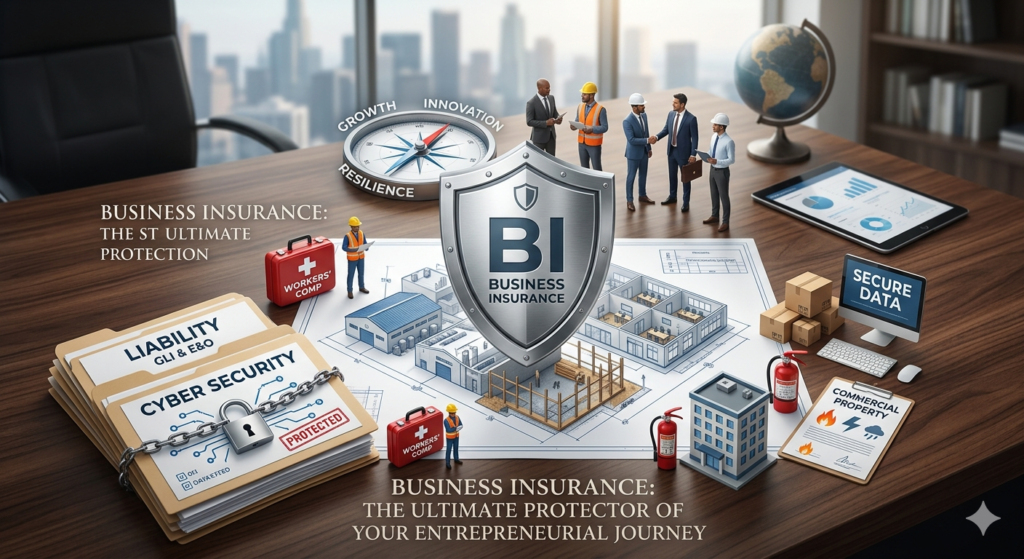
In the modern global economy, launching a business venture is one of the most exhilarating and potentially rewarding paths an individual can pursue. Entrepreneurs are inherently visionaries, focusing their intellectual capital and physical energy on product development, market penetration, operational scaling, and revenue optimization. However, the path of entrepreneurship is systematically filled with profound volatility, hidden liabilities, and unpredictable operational hazards. From sudden property damage and supply chain disruptions to employee injuries, cyber breaches, and aggressive client litigation, risk is a permanent co-founder in every corporate entity.
Many business owners mistakenly view corporate insurance as a regulatory burden or an unnecessary overhead expense that drains precious monthly cash flow. This is a critical strategic error. Comprehensive commercial insurance is not a passive line-item expense; it is the ultimate financial shield and a core foundational asset that guarantees corporate longevity. Without a robust, professionally structured insurance portfolio, a single catastrophic event or a multi-million-dollar lawsuit can completely liquidate your corporate capital, seize your personal assets, and permanently terminate your entrepreneurial dream. This definitive, deep-dive guide explores the multi-faceted universe of business insurance, breaking down necessary coverage architectures, risk assessment methodologies, and advanced strategies to bulletproof your enterprise.
The Structural Anatomy of Enterprise Risk: Why Modern Businesses Are Vulnerable
The corporate risk landscape of 2026 has become increasingly complex and hostile. Traditional operational hazards have combined with highly sophisticated digital threats, creating a volatile matrix for modern organizations. To protect an enterprise, an entrepreneur must first understand the primary categories of vulnerability that require institutional shielding:
1. Third-Party Legal Liability
We operate in an intensely litigious commercial environment. If a customer, vendor, delivery courier, or general member of the public suffers a bodily injury or property damage while interacting with your business, your company is legally liable. The financial costs of medical treatments, rehabilitation, and legal defense bills can rapidly escalate into hundreds of thousands of dollars.
2. Operational Disruption and Property Destruction
Your physical assets—including corporate headquarters, manufacturing facilities, warehouses, specialized equipment, inventory pipelines, and digital servers—are permanently exposed to environmental hazards. Severe weather events, localized flash flooding, electrical fires, and water main breaks can instantly paralyze your ability to generate revenue while your fixed overhead expenses continue to accumulate.
3. Digital and Cyber Vulnerabilities
As business operations become entirely digitalized, data has become both an enterprise’s most valuable asset and its greatest liability. Ransomware deployments, phishing infiltrations, and corporate data breaches can expose sensitive customer payment cards, proprietary source codes, and private intellectual property. The subsequent regulatory fines, forensic auditing bills, and brand damage can easily bankrupt a mid-sized organization.
The Core Pillars of Business Insurance: Essential Policies for Every Venture
Navigating commercial insurance requires a deep understanding of specialized policy lines. While coverage must be tailored to your specific industry, there are five foundational pillars that form the bedrock of an enterprise risk shield:
| Policy Type | Primary Protection Focus | Critical Operational Target |
|---|---|---|
| Commercial General Liability (CGL) | Third-party bodily injury, property damage, and advertising injuries occurring on business premises. | Protects against everyday physical accidents, slip-and-falls, and accidental damage to client property. |
| Commercial Property Insurance | Physical assets, including buildings, inventory, office equipment, and specialized machinery. | Funds the replacement or repair of assets destroyed by fire, windstorms, theft, or vandalism. |
| Business Interruption Insurance | Lost net income and ongoing fixed expenses during a forced operational shutdown caused by a covered physical loss. | Replaces revenue streams to pay rent, corporate taxes, and employee payroll while rebuilding. |
| Professional Liability / E&O | Financial losses caused by professional negligence, systemic errors, omissions, or a breach of contract. | Essential for service providers, consultants, software engineers, accountants, and legal advisors. |
| Workers’ Compensation | Medical care expenses, rehabilitation costs, and lost wages for employees injured on the job. | A strict statutory requirement in almost every jurisdiction; eliminates direct employee-employer lawsuits. |
Deep-Dive Executive Analysis: Specialized Coverage for Scaled Operations
As an entrepreneurial venture evolves from a lean startup into a scaled enterprise with multi-layered governance structures, baseline protections are no longer sufficient. Executive teams must deploy specialized corporate coverage lines to insulate advanced operational variables:
Directors and Officers (D&O) Liability Insurance
As you secure venture capital, appoint a formal board of directors, and scale your shareholder base, your corporate leadership team faces direct personal exposure. Shareholders, regulatory bodies, and competitors can sue directors and officers personally for alleged breaches of fiduciary duty, mismanagement, misleading statements, or regulatory non-compliance. D&O insurance shields the personal banking accounts, real estate, and investments of your leadership team, ensuring you can attract world-class executive talent to guide your enterprise.
Cyber Liability and Data Breach Insurance
Modern cyber insurance is divided into two vital defensive components:
- First-Party Coverage: Funds the direct costs incurred by your business to respond to an active digital assault. This includes hiring forensic IT specialists to scrub servers, funding ransomware negotiation, purchasing credit monitoring services for affected users, and executing public relations campaigns to restore consumer trust.
- Third-Party Coverage: Defends your business if clients or partners sue your corporation for failing to maintain adequate cybersecurity protocols, alleging that your negligence directly allowed their private data to be leaked onto the dark web.
Product Liability Insurance
If your enterprise designs, manufactures, distributes, or sells physical goods—ranging from consumer electronics and medical devices to children’s toys and packaged foods—you are strictly liable for the real-world performance of those items. If a manufacturing defect or design flaw causes physical injury or illness to a consumer, product liability coverage absorbs the massive legal defense costs and subsequent court-mandated damages. For a comprehensive analysis of how these multi-layered claims evaluations operate globally, look into our detailed review on how insurance claim settlement amounts are calculated.
The Strategic Alternative: The Business Owner’s Policy (BOP)
For small-to-mid-sized entrepreneurs looking to optimize their risk budgets, insurance carriers offer a highly efficient packaged solution known as a Business Owner’s Policy (BOP). A BOP bundles Commercial General Liability, Commercial Property, and Business Interruption insurance into a single integrated contract under one premium fee.
Purchasing a BOP is significantly more cost-effective than buying individual policies independently. However, entrepreneurs must recognize that a standard BOP features structural limitations. It rarely includes professional liability, workers’ compensation, cyber coverage, or commercial auto insurance. These lines must be carefully added as independent riders or separate standalone policies to prevent dangerous coverage gaps.
The Professional Claims Protocol: Navigating a Corporate Crisis
The true value of a business insurance policy is realized when a crisis occurs and a claim must be processed. When a loss manifests, your operational leadership team must execute a disciplined, precise communication protocol to secure full, uninterrupted financial recovery:
- Immediate Mitigation: Take immediate, legal actions to prevent further damage. If a pipe bursts, shut off the water valves and hire emergency restoration crews to dry the area. Document all temporary mitigation expenses, as they are fully reimbursable under standard property clauses.
- Ironclad Documentation: Capture comprehensive photographic and video evidence of the physical damage or operational disruption. Secure police reports, witness testimonies, and preserve all internal digital communication and server logs.
- Formal Notification: Notify your insurance broker or carrier immediately within your policy’s mandated reporting window. Delayed reporting is a primary reason carriers issue claim denials. If your enterprise faces an unfair or complex denial from a carrier, your risk managers should deploy advanced appeal strategies, similar to tracking how to appeal an auto insurance claim denial to protect your corporate interests.
- [ ] Audited all physical business locations and verified that property limits match current real estate and construction asset values.
- [ ] Confirmed that Commercial General Liability limits are sufficient to protect the enterprise against high-stakes personal injury lawsuits.
- [ ] Evaluated whether the business model requires a specialized Professional Liability (E&O) policy line.
- [ ] Implemented robust cybersecurity measures to qualify for preferred premium tiers on Cyber Liability insurance.
- [ ] Structured Business Interruption coverage with a realistic indemnity window (typically 12 to 24 months) to ensure survival during a full rebuild.
- [ ] Verified the corporate compliance status of all active insurance providers via leading global financial rating bureaus.
- [ ] Established an internal protocol to cross-check potential claims avenues, much like analyzing how to check if you have a compensation claim for structured corporate financial losses.